
From Promise to Practice: The Uphill Battle of Clinical AI Adoption
AI-based medical solutions can improve clinical work and spot risks early, but many solutions never reach routine use after studies or pilots. This thesis explores why, focusing on radiology and sepsis AI in university hospitals and what helps or blocks their adoption.
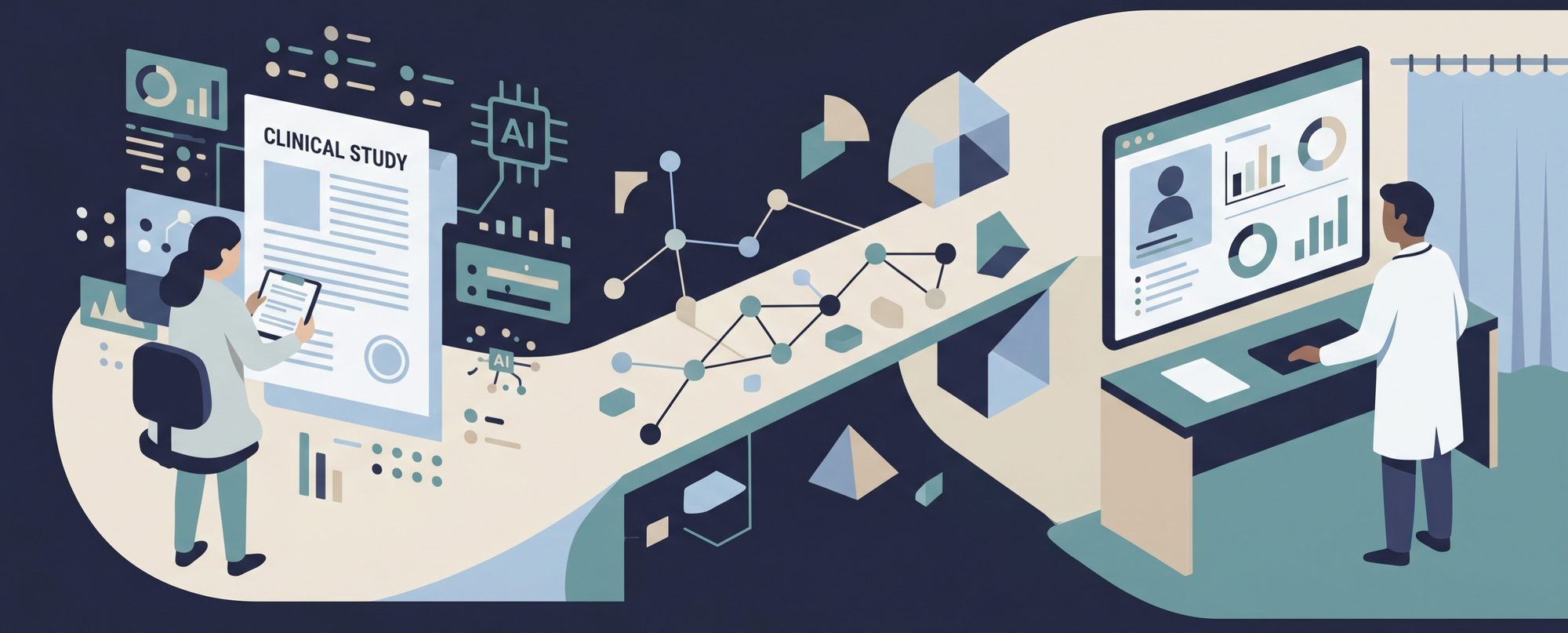
This thesis explores what university hospitals need to consider when moving AI-based medical solutions from studies and pilot projects into everyday clinical practice
Topic
AI-based medical solutions can support clinical work, improve workflows, and help detect risks earlier. However, many solutions do not reach routine clinical use after promising studies or pilot projects. This thesis examines why this happens in university hospitals. It focuses on AI use cases in radiology imaging and sepsis early detection and explores what helps or prevents these solutions from becoming part of everyday clinical practice.
Relevance to practitioners
For hospitals, clinical AI is not only a technical topic. Even a strong AI model can fail if it does not fit the clinical workflow, lacks convincing evidence, cannot access the right data, or has no clear owner after the pilot phase. The thesis is relevant for practitioners because it shows which issues should be addressed early when planning, testing, and implementing AI-based medical solutions.
Results
The study found that successful clinical AI translation depends on six areas: a clear clinical problem, reliable evidence and safety, regulatory and institutional governance, data infrastructure and interoperability, stakeholder alignment, and long-term operational ownership. The main finding is that model performance alone is not enough. AI solutions are more likely to reach routine use when they solve a real clinical problem, work in local conditions, fit existing workflows, and can be maintained after the project phase.
Implications for practitioners
- Start with a concrete clinical or operational problem, not with AI as a technology.
- Check early whether the solution can be validated, regulated, integrated, and maintained.
- Involve clinicians, IT, data experts, management, procurement, and future system owners from the beginning.
- Evaluate AI not only by accuracy, but also by safety, workflow impact, clinical usefulness, and resources needed.
- Plan for routine use before the pilot ends, including funding, monitoring, responsibilities, and measurable impact.
Methods
This thesis used a qualitative research design. Six semi-structured expert interviews were conducted with stakeholders from university hospitals in the DACH region. The interviews focused on AI-based medical solutions in radiology imaging, sepsis early detection, and broader clinical AI implementation. Three additional expert conversations were documented as field notes and used as contextual material. The data were analyzed using thematic analysis with MAXQDA to identify recurring barriers, success factors, and patterns in the translation from clinical evidence to routine care.