
Determining ERP Implementation Obstacles in Swiss SMEs: The Mediating Role of User Adoption
Determining ERP Implementation Obstacles in Swiss SMEs: The Mediating Role of User Adoption
Temer Al Nablsi 09.08.2026
Topic
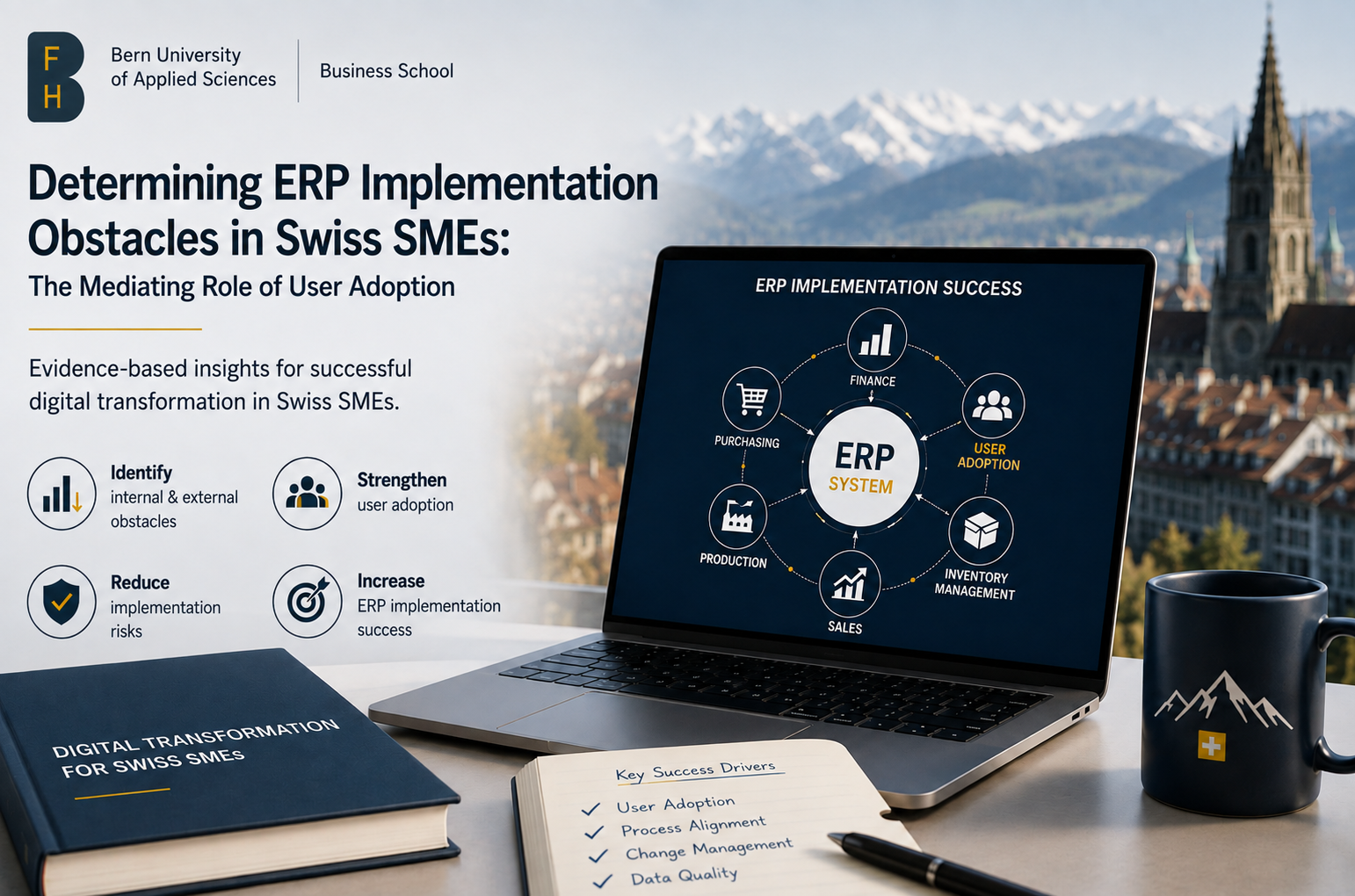
The main constraints to the successful deployment of Enterprise Resource Planning (ERP) in Swiss small and medium-sized businesses (SMEs) are examined in this master's thesis. It focuses on both external and internal obstacles, such as vendor dependency and regulatory pressure, as well as resource constraints and data complexity. Using a structured quantitative research technique, the study also investigates the mediating impact of user adoption and the possible moderating effects of contextual factors including business size, and top management support.
Relevance
ERP systems are essential for SMEs' digital transformation, yet implementation failure rates are still quite high. To prevent expensive disruptions, practitioners, particularly in the Swiss SME setting, must comprehend why these programs fail. This study offers evidence-based perspectives on how external and organisational factors affect ERP results. For managers and decision-makers looking to increase implementation success, distribute resources wisely, and lower risks related to digital transformation projects, it is especially pertinent.
Results
The results verify that ERP deployment success is significantly hampered by both internal and external constraints. One important mediating factor that connected internal difficulties to the end results of the system was found to be user adoption. On the other hand, moderating factors like business size and top management support were not statistically significant. The findings show that the organisation's structural and cultural readiness for change is more important for ERP performance in Swiss SMEs than contextual buffers.
Implications for Practitioners
- Before starting ERP implementation initiatives, give user adoption first priority.
- Make early investments in staff readiness, process clarity, and data quality.
- As risk mitigators, don't rely only on leadership support.
- Maintain long-term support agreements and handle outside contractors with caution.
- Consider ERP deployment as an organisational change rather than merely a technical improvement.
Methods
Professionals employed by Swiss SMEs were given a structured survey as part of this study's quantitative, cross-sectional research design. Purposive sampling was used to gather 202 responses in total. IBM SPSS and Andrew F. Hayes' PROCESS macro model were used to analyse the data. Multiple linear regression, mediation, and moderation testing using 5,000 bootstrap samples were also included in the investigation. Cronbach's alpha and common data screening techniques guaranteed validity and reliability, enabling a thorough assessment of the suggested hypotheses.