Orchestrating Medical AI in Switzerland
A Design Science Blueprint for Manageable and Compliant Hospital AI-Architecture Transformation
Topic:
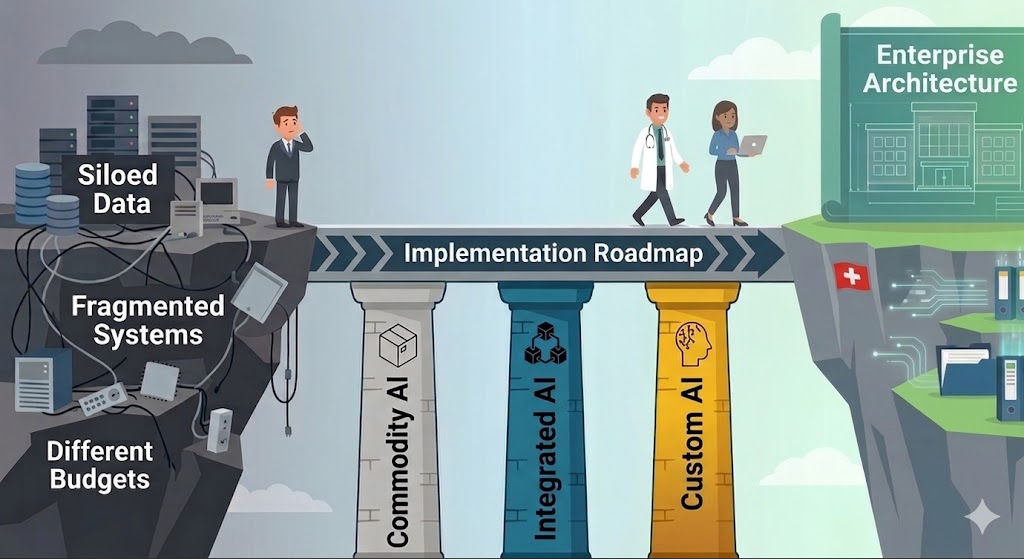
Rising cost pressures in the Swiss healthcare system mean hospitals must urgently tackle administrative overhead by automating workflows. While Artificial Intelligence (AI) offers immense opportunities, the necessary transition based on fragmented legacy systems, different spending powers, and unclear regulatory guidelines creates a significant execution gap.
This Master’s thesis bridges the gap by suggesting a clear three-pillar categorization framework, an enterprise architecture, and a compliant implementation roadmap. This strategic, step-by-step roadmap allows Swiss healthcare institutions of any size to navigate change safely, manage costs, and build a future-proof AI ecosystem.
Relevance:
Replacing legacy IT landscapes with centralized data platforms is financially out of reach for most mid-sized hospitals. This thesis provides a realistic alternative through a step-by-step approach.
By targeting "low-hanging fruit" regarding data availability and legacy infrastructure, it makes digital transformation actionable and affordable for institutions of any size. Simultaneously, for complex AI deployments, the research outlines how hospitals can leverage inter-institutional partnerships and access their data outside of a centralized data platform.
Ultimately, this thesis directly addresses the Swiss affordability crisis by incorporating AI technology into manageable, real-world hospital operations.
Results:
This thesis delivers three Design Science Research (DSR) artifacts (Hevner et al., 2004). While the initial categorization framework provides the structural foundation for sorting AI use cases, the subsequent core artifacts are systematically mapped onto the Human, Organizational, and Technical (HOT) fit framework (Yusof et al., 2008) to support the actual transformation over the whole organzation.
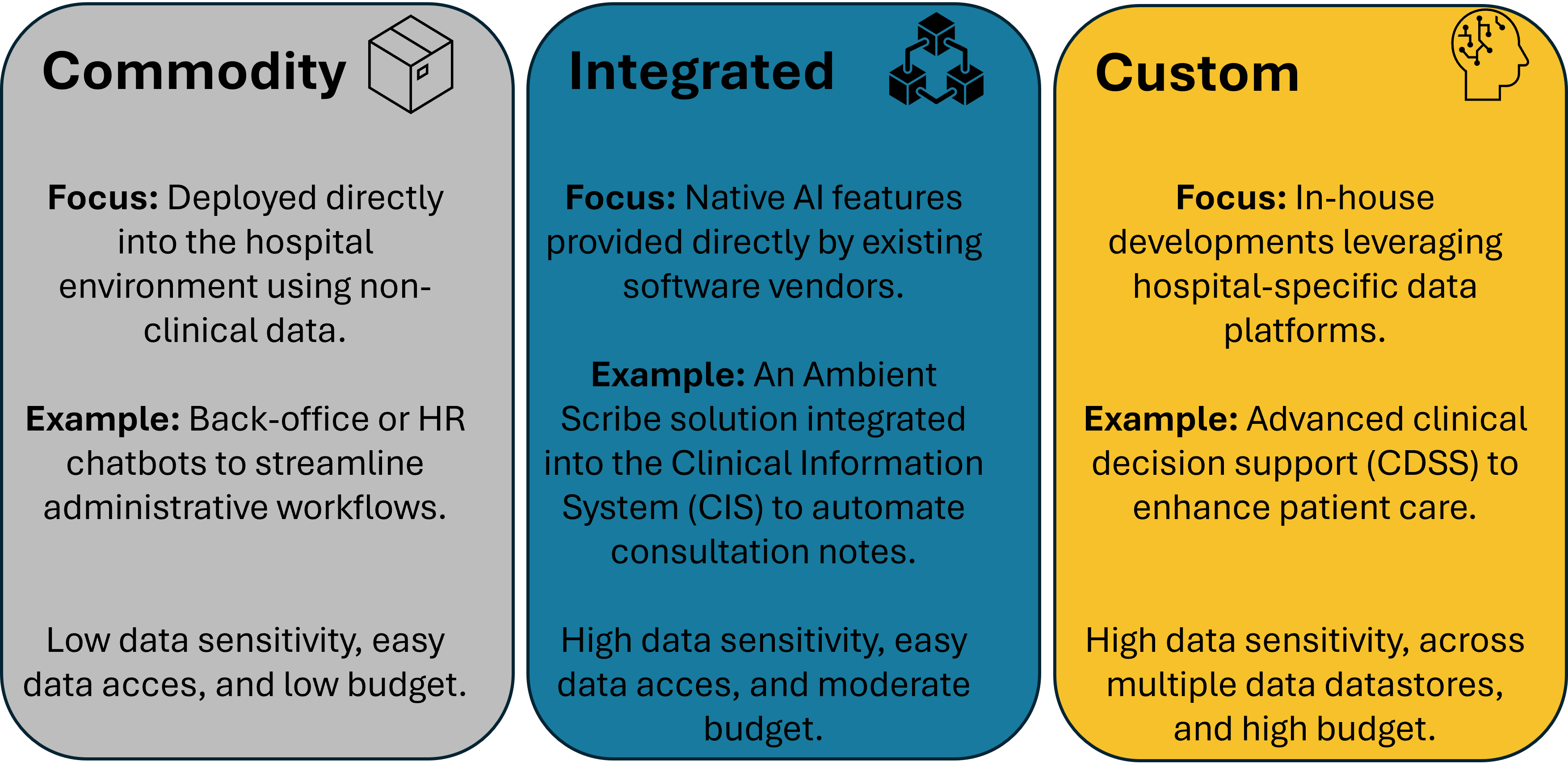
- First, a three-pillar categorization framework for AI solutions structures use cases by data availability, data sensitivity, and budget constraints.
- Second, an enterprise architecture leverages existing legacy software, ensuring computing resources are optimized on a case-by-case basis (Technical fit).
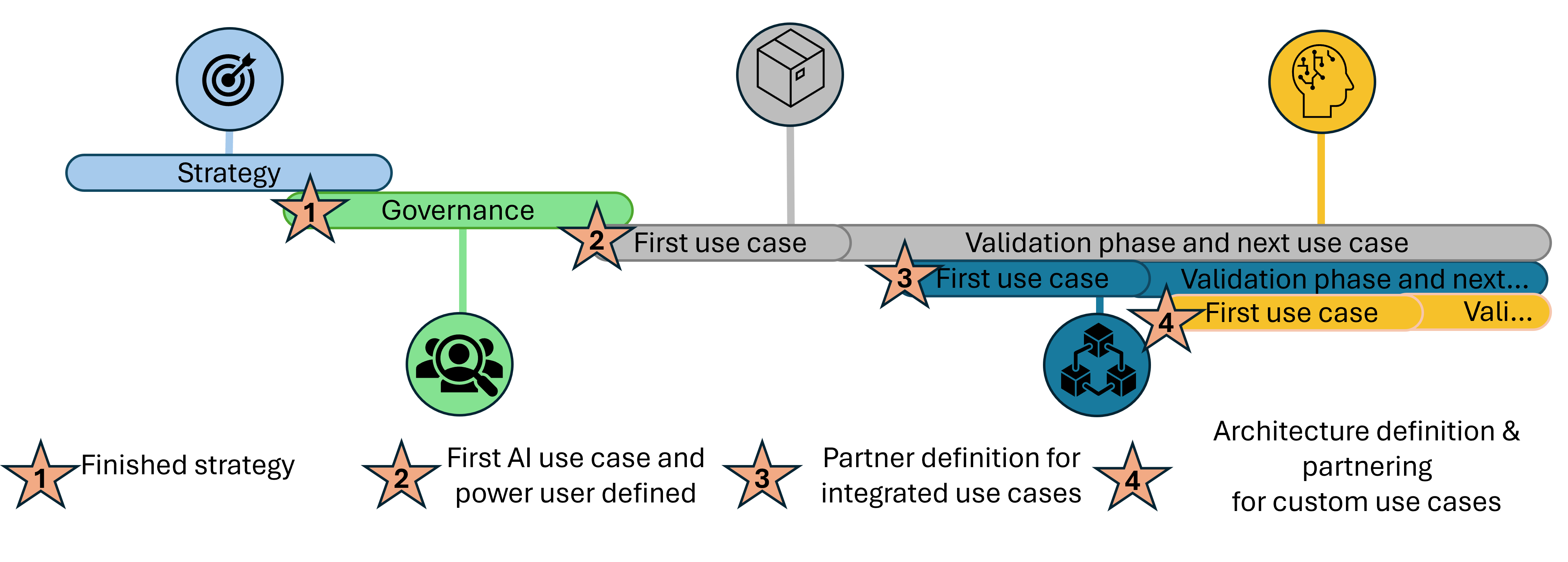
- Third, an implementation roadmap serves as a strategic guideline for hospitals to transform their legacy systems and organization by balancing technical rollout with human readiness and strict governance (Human / Organizational fit).
Together, these tools help hospitals transform fragmented legacy systems into a compliant, manageable, and cost-efficient ecosystem ready for the necessary AI transformation.
Implications for practitioners:
- Hospitals should start with a clear, easy first step, like using simple AI to automate basic paperwork and routine administrative tasks.
- IT teams do not need a massive infrastructure overhaul right away; they should leverage their current data and legacy systems to get a fast, low-cost win.
- Hospital boards must step up and establish strict internal rules for AI use and set achievable goals for the transformation.
- Local software vendors must unlock their closed systems and offer open, standardized interfaces (like HL7 FHIR or openEHR) so hospitals can easily plug in new AI tools.
Method:
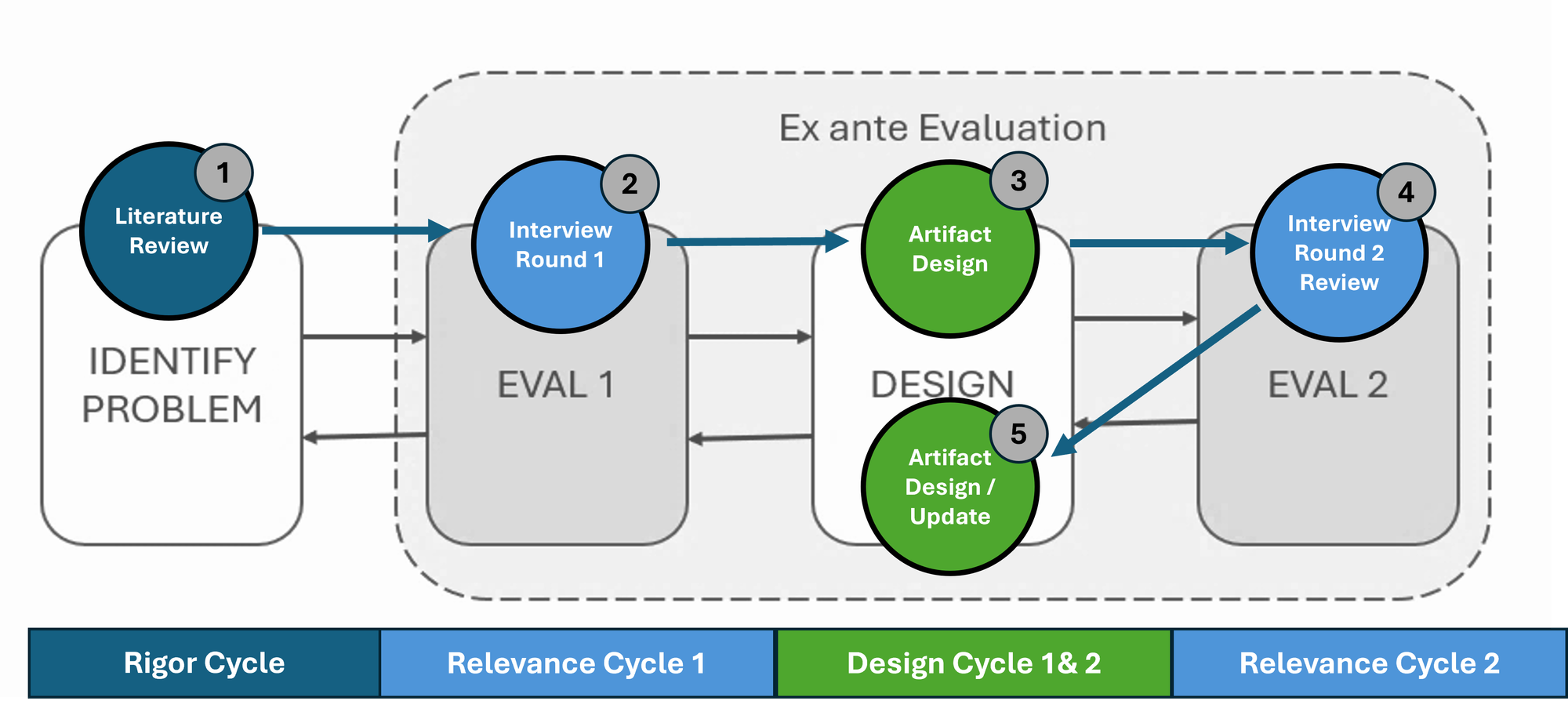
To create a real-world solution for hospital AI adoption, this study uses the DSR method over two rigorous iteration phases. Following an initial problem identification phase rooted in literature (Rigor Cycle), we launched Relevance Cycle 1, conducting 12 data collection sessions with industry experts to gather operational requirements. These insights fueled Design Cycle 1 to build the first versions of our artifacts, utilizing the Gioia method for data analysis (Gioia et al., 2013) and the HOT-fit framework for the artifact design. To ensure the results were highly practical, a second iterative loop (Relevance and Design Cycle 2) was executed, incorporating four additional expert validation interviews to finalize all three artifacts.