
Trick or Treat? Working Students' Approach to Digitalization
The thesis explores how working students in knowledge worker jobs experience and respond to digitalization. To make empirical results applicable to practitioners, working student personas were derived from the data.
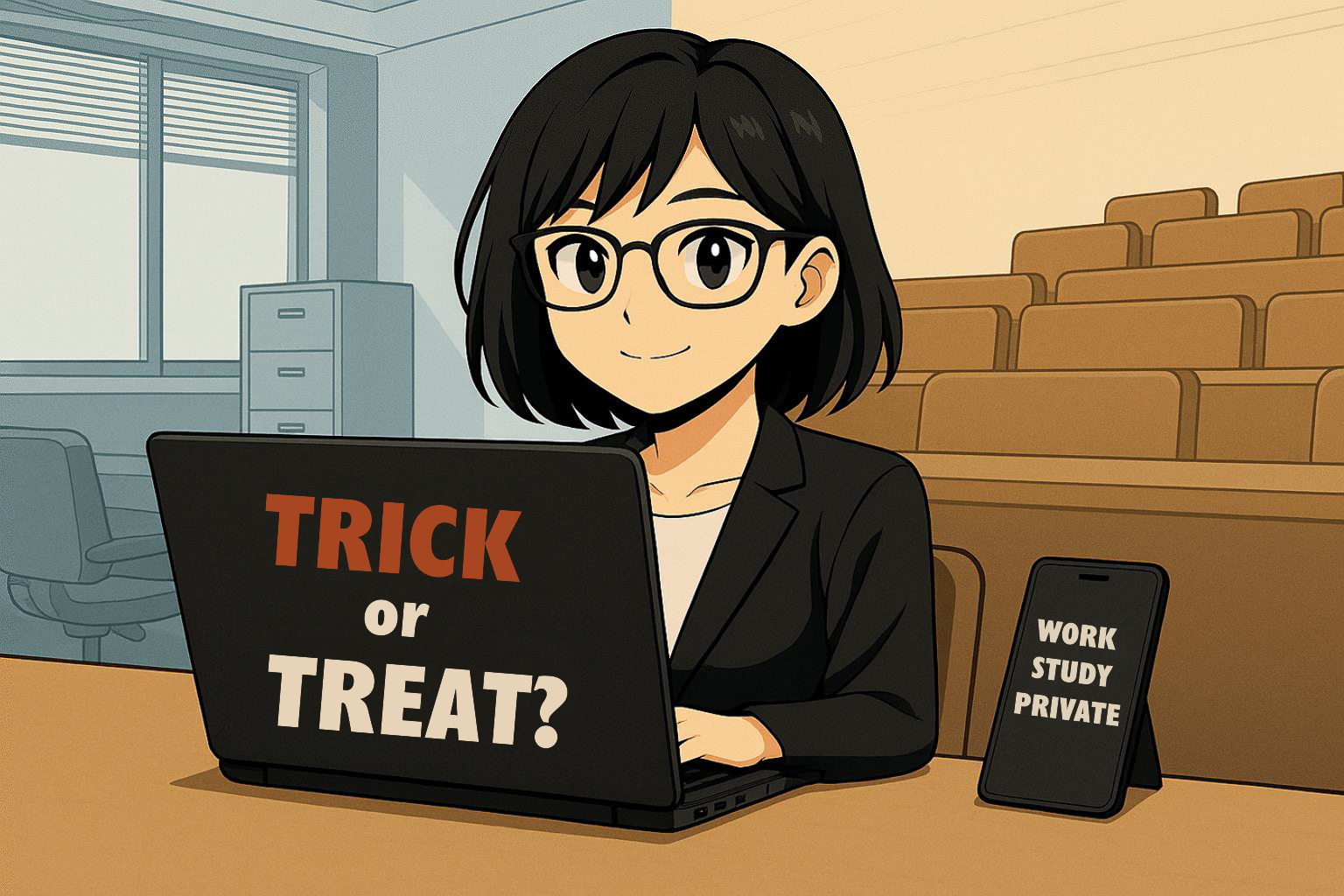
Topic
The thesis explores how working students in knowledge worker jobs experience and respond to digitalization. It examines their perceptions of digital tools and practices, and how they manage the boundaries between study, work, and private life in digitally mediated higher education settings. To make empirical results applicable to practitioners, working student personas were derived from the data.
Relevance
Despite the majority of Swiss higher education students being employed alongside their studies and digitalization being broadly established in higher education, little is known about how working students in knowledge worker jobs experience and respond to digitalization. Understanding these experiences is important for practitioners because it reveals how students manage boundaries between the life domains, work, study, and private life, and how digital tools enable or constrain their coping strategies. These insights help program coordinators, instructors, and student support teams design curricula, communication practices, and support services that account for diverse needs in more and more digitalized learning environments.
Results
Working students generally view digitalization positively, seeing it as an enabler that makes it possible for them to study with respect to their needs for self-determination. They use both integrating (blending work, study, and private life activities) and segmenting (separating domains and setting boundaries) behaviors across organizational, technological, individual, and social domains, flexibly adapting strategies to personal needs and the priorities of different life domains. These behaviors are situational. Only limited peer exchange was observed. The three developed personas - empirically grounded archetypes, derived from the data - can help practitioners recognize diverse needs.
Implications
- Raise awareness among students about boundary-management practices at program entry and offer guidance.
- Use the developed personas to design assignments, group work, and communication practices that accommodate different needs.
- Ensure curriculum and support structures consider technological, organizational and social dimensions of digital boundary management.
Methods
A qualitative approach was used to explore working students’ experiences. Nineteen semi-structured interviews were conducted with students employed in knowledge worker roles. Interview data were analyzed using Gioia’s inductive coding methodology to move from detailed statements to broader themes and aggregate dimensions. This resulted in a model capturing the interplay of the individual tendency toward integration versus segmentation of digital activities and the prioritization of a life domain. The personas were constructed from the analyzed data, applying Goodwin’s framework.