
Digital Twins in Professional Handball Coaching: Current Practices, Data Infrastructures and Future Potential
Digital Twins in Professional Handball Coaching: Current Practices, Data Infrastructures and Future Potential
Topic
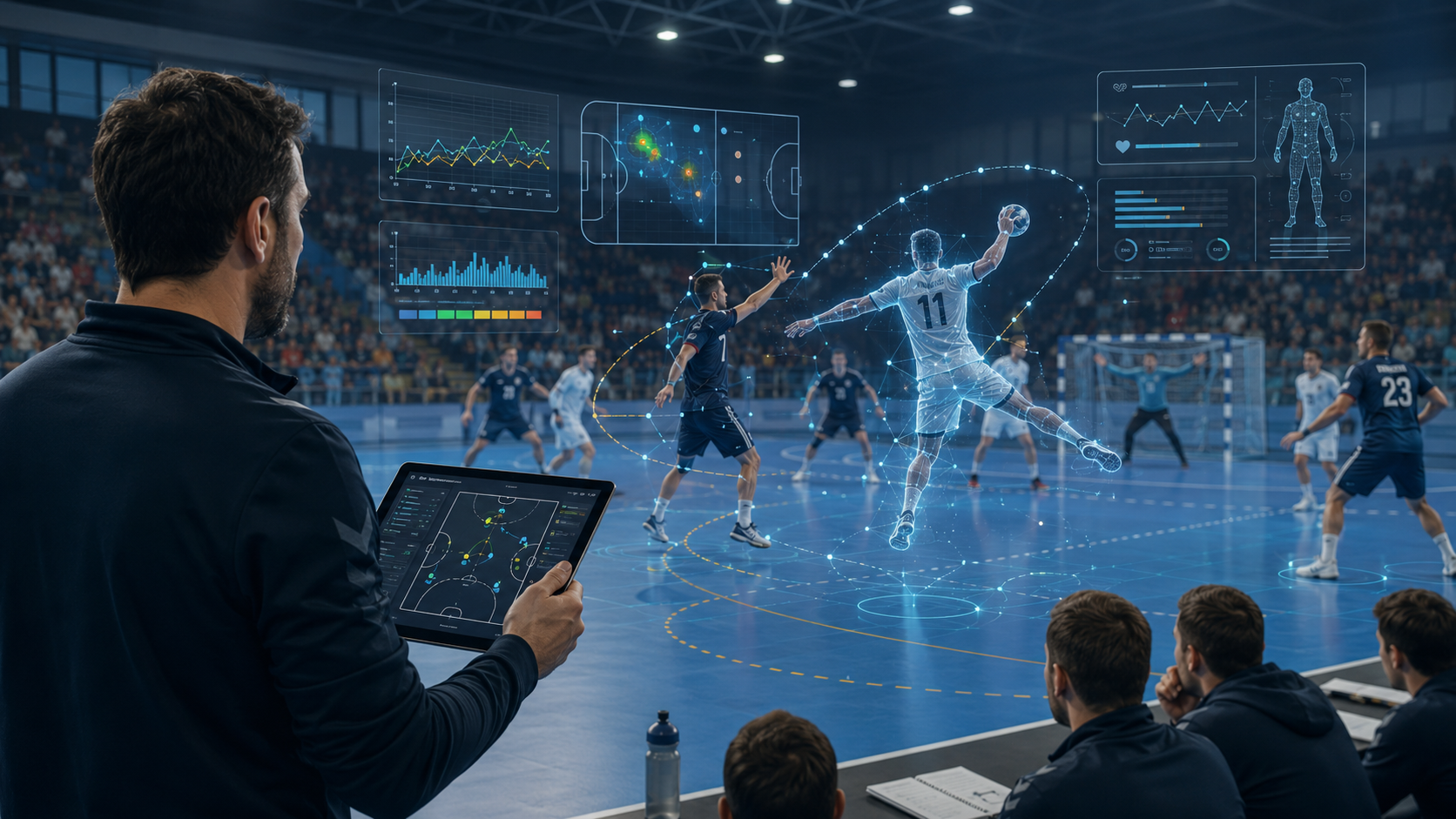
Professional handball clubs increasingly use digital technologies such as video analysis, tracking systems, athlete management platforms, readiness questionnaires and statistical tools. This master thesis explores how these technologies are currently integrated into professional and semi-professional handball coaching and whether they can form the basis for future Digital Twin applications. The focus is not on developing a technical Digital Twin system, but on understanding how coaches, analysts and sport scientists perceive its potential for performance analysis and decision-making.
Relevance
Handball is becoming increasingly data-driven, yet many clubs still work with fragmented systems and isolated data sources. Coaches must therefore decide which information is relevant and how it can be translated into practical action for training, workload management, opponent analysis and tactical decisions. Digital Twins could help integrate these data sources more effectively. However, handball is highly dynamic, physical and emotionally complex. Understanding where digital systems create value (and where human expertise remains essential) is therefore highly relevant for clubs, coaches and technology providers.
Results
The findings show that professional handball already uses several digital building blocks, including video analysis, tracking systems, readiness monitoring, dashboards and AI-supported analysis tools. However, these tools are not yet integrated into comprehensive Digital Twin systems. Data support coaching decisions, workload management, scouting and player development, but they do not replace human judgment. Key barriers include data quality, fragmented systems, limited resources and the need for hybrid experts who can translate between IT, sport science and coaching practice.
Implications for Practitioners
- Clubs should first integrate and improve existing data sources before aiming for full Digital Twin systems.
- Coaches should use data as decision support while keeping intuition, experience and player knowledge central.
- Teams need people who can translate between IT, sport science and coaching practice.
- Leagues and federations can support adoption through standards, shared infrastructures and coach education.
- Technology providers should develop simple, handball-specific and coach-friendly solutions instead of transferring generic tools from other sports.
Methods
The study is based on six semi-structured expert interviews with head coaches, assistant coaches, a data analyst and a handball researcher from Germany, Switzerland and Denmark. The interviews were conducted in May 2026, transcribed, anonymized and analyzed using Taguette. The analysis followed a Gioia-inspired qualitative approach. In total, 1,359 text passages were coded and condensed into 19 codes, first-order concepts, second-order themes and five aggregate dimensions. The coded excerpts were also checked against the original transcripts to ensure that statements were interpreted in their proper context.